
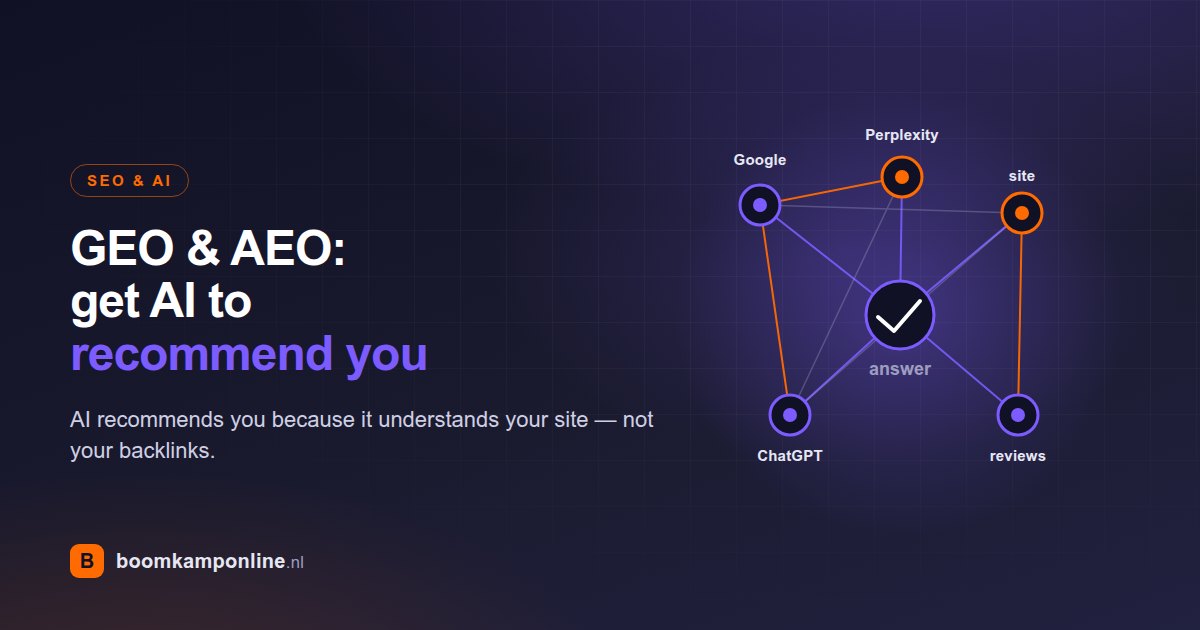
Google was the only gateway to your website for years. That has changed: more and more people ask an AI assistant for advice, such as ChatGPT or Perplexity. And those assistants answer based on what they can read from your site.
GEO and AEO are exactly about that. In this article I explain what they are and what you can practically do about them.
What is GEO?
GEO stands for Generative Engine Optimization: optimising your site so generative AI chooses you as a source. ChatGPT and Perplexity take their answers from sources they trust. To appear in those answers, your site needs to be readable and trustworthy — for machines and for people.
What is AEO?
AEO is Answer Engine Optimization: making sure your answer is the answer AI tools give. Not just a result in a list, but literally the piece of text an assistant reads out to your customer.
What can you practically do?
- Write clear answers. A page that directly answers the question in its title is quoted more often.
- Use structure: headings, lists and an introduction that gets to the point in the first paragraph.
- Add structured data (Schema.org). This lets machines understand exactly who you are, what you do and who it applies to.
- Keep your site fast and secure (HTTPS). AI tools judge trustworthiness the same way search engines do.
- Keep your name, services and location consistent across all pages and platforms.
GEO and SEO: not or, but and
Traditional SEO still matters — being found on Google is not going anywhere. GEO and AEO come on top: they make your site visible in the answers of AI assistants. And those answers increasingly decide which company a customer calls.
Want to get started?
I’d be happy to help you make your site ready for AI search. Get in touch and I’ll review with you — free of charge — where your business stands now.