
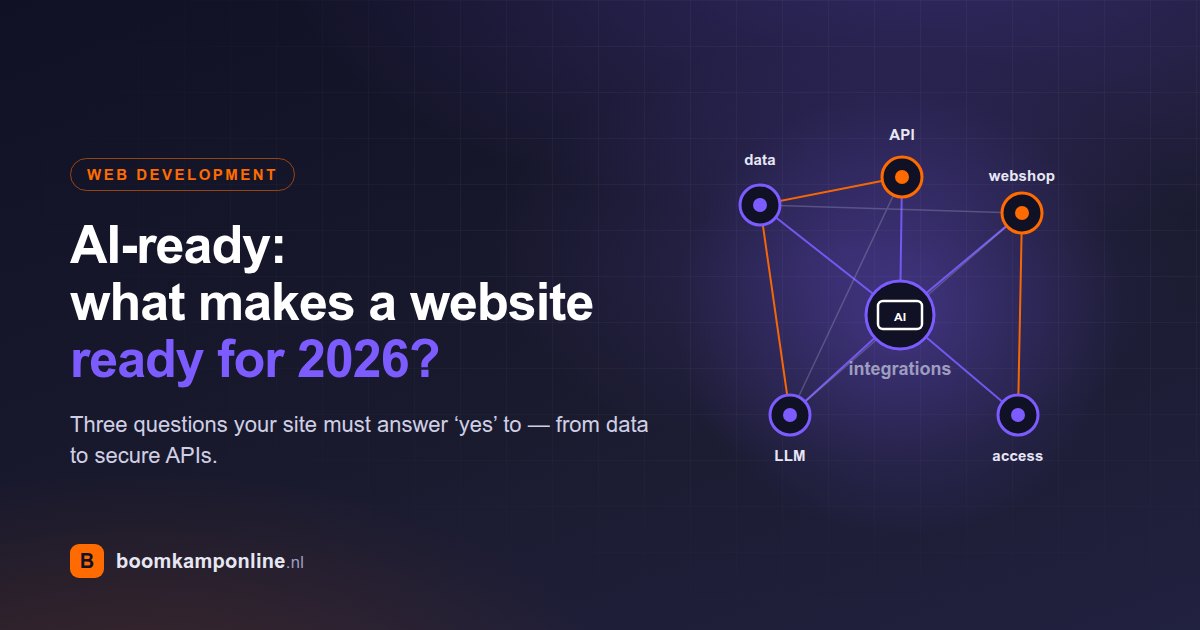
AI is no longer something of the future: it reads, summarises and advises based on websites. But many sites aren’t ready for it. They’re unstructured, slow or hard for machines to read.
So what makes a website AI-ready? In this article I give you a practical checklist. No jargon.
1. Clear structure
AI tools value a logical layout: one H1 per page, clear headings, short paragraphs. Each page answers one central topic — that’s what search engines have been asking of you for years too.
2. Machine-readable data
Structured data (Schema.org) tells machines exactly what you are: a business, a product, an article, a review. A few lines of code literally make your site more understandable to AI.
3. Security and privacy
If you connect AI to your website — think of a chatbot — you want to do it safely. No sensitive data to random services, but encryption, a data processing agreement and control over what happens to the data.
4. One source of truth
AI is only as good as the data it gets. Make sure your customer data, products and prices are correct in one place, so your site and the AI draw from the same source.
5. An integration, not a gadget
A chatbot that doesn’t talk to your systems is decoration. Connect AI to your data and workflows — via APIs or a tool like n8n — so it really does something for the visitor.
What does it deliver?
An AI-ready website feels faster, is easier to find, and can soon handle a large share of recurring questions itself. And you’re ready for how people increasingly search: through AI.
Questions?
Want to know how AI-ready your website is? Get in touch and I’ll review it with you for free.