
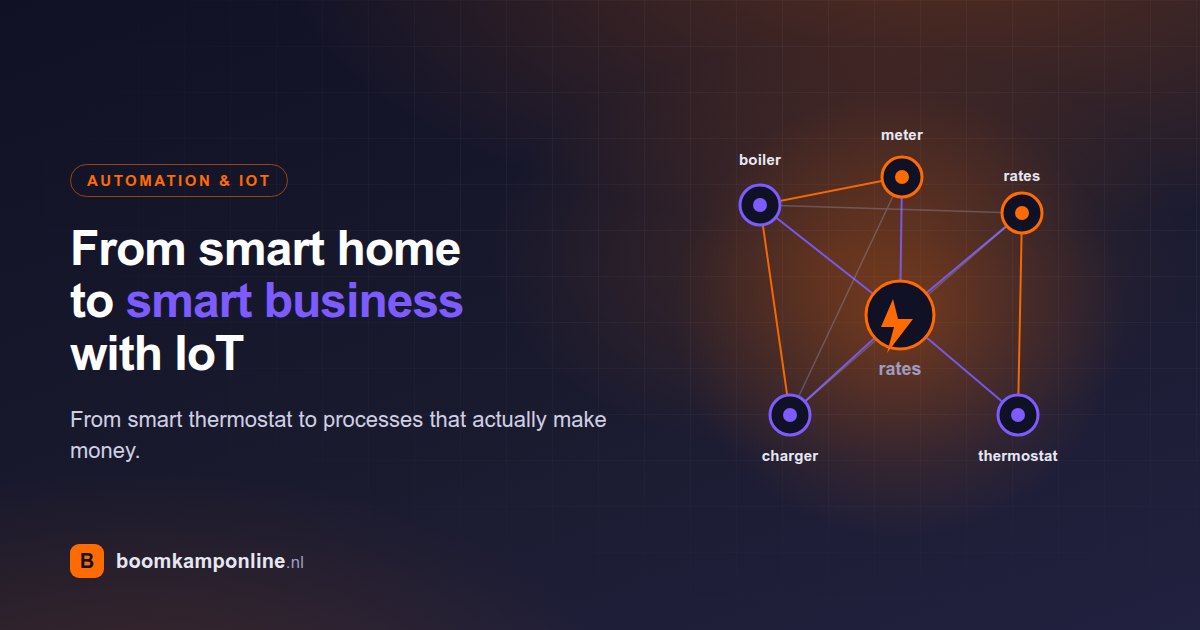
Your thermostat already knows when you’re home and adjusts the heating accordingly. Smart control like that can reach much further than your living room. Combined with a dynamic energy contract it lowers your energy bill too - and it works just as well at business scale.
In this article I explain how IoT and smart control of energy contracts work.
What is a dynamic energy contract?
With a dynamic contract you pay the hourly market price. That price fluctuates: expensive during the day, cheaper at night and in off-peak hours. Being smart about when you use power pays off.
The role of IoT
IoT stands for Internet of Things: devices that communicate over a network. Sensors and switches measure and steer in real time. This lets a system:
- fetch the electricity price for the next hour
- switch on heavy equipment in cheap hours
- adjust heating or cooling based on occupancy and weather forecasts
From smart home to smart business
At home this is about comfort. In your business it’s about money. Think of a warehouse with ventilation, an online shop with cooling, or production machines you run in off-peak hours. Same sensors, same logic - only here the savings decide the business case.
How do you start?
Don’t automate the whole building at once. Start with one consumer that’s easy to steer - cooling, ventilation, EV charging - and measure what it saves:
- pull the hourly average electricity prices via your supplier’s API
- a simple rule: switch on when the price drops below your threshold
- track the results in a dashboard
What does it deliver?
Depending on your usage, a few smart switches can already save a few percent on your energy costs. With larger consumers this adds up quickly.
Want to know more?
I love building IoT control systems like these for businesses. Get in touch and I’ll review where your savings are - free of charge.